

Have you ever stubbed your toe so hard that you saw stars? It is a common accident. You might be hopping around in pain and wondering, “How Do I Know If My Toe Is Broken or Just Bruised?” It is a very valid question. Often, both a broken toe and a bruised one feel quite similar at first. They can both turn shades of purple or blue and swell up like a balloon. Since it is hard to tell the difference just by looking, you need to pay close attention to your body. This guide will help you understand your symptoms and decide if you need a doctor’s help or just some rest at home.
Understanding the Difference in Pain
The biggest clue is how the pain feels over time. A simple bruise usually hurts a lot right when it happens, but the pain starts to fade after a few hours or a day. If your toe is broken, the pain often stays sharp and strong. You might notice it aching or throbbing for days instead of just hours. If you try to touch it and the pain makes you wince, that is a strong sign of a bone injury.
Look for Changes in Alignment
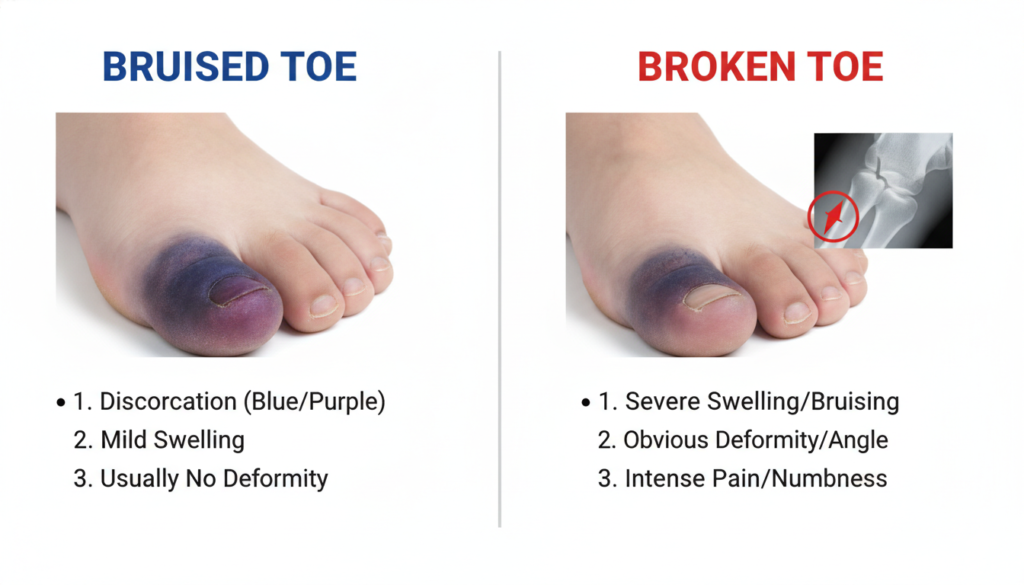
One of the most obvious ways to tell if your toe is broken is to look at its shape. Compare your hurt toe to the same toe on your other foot. Does it point in a weird direction? Is it crooked or bent at an odd angle? If your toe looks like it is “out of place,” it is likely broken. A simple bruise might cause swelling, but it will not change the actual alignment or shape of your toe.
Checking for Normal Movement
Can you wiggle your toe? If you can move it up and down without extreme pain, it might just be a bruise. However, if the pain is too intense to move it, or if it feels “stuck,” you should be careful. A broken bone often makes it very difficult to bend or straighten the digit normally. Even if you can move it a little, doing so might cause a sharp, deep ache.
The Swelling and Color Test
Both injuries cause discoloration. Blood vessels under the skin break, leading to black or blue colors. A bruise is usually contained to the area you hit. If the bruising spreads across the entire foot or looks very dark and deep, the damage might go deeper than the skin. Extreme swelling that does not go down after a day is another warning sign.
Can You Walk on It?
This is a simple test. If you can walk with a bit of pain, it might be a bad stub. But if putting any weight on your foot makes you feel like you are stepping on broken glass, you need to see a professional. Difficulty bearing weight is a classic sign of a fracture. Do not try to “walk it off” if the pain is severe, as you could make the injury worse.
Did You Hear a Sound?
Sometimes, people hear a “pop” or “crack” when the injury happens. If you remember hearing a snap when you stubbed your toe, that is often a sign of a bone breaking. Bruises do not make sounds. If you felt a grind or a snap, treat it as a potential fracture and seek medical advice as soon as you can.
When to See a Doctor
You should always be safe. If you have diabetes, you must see a doctor for any foot injury. Also, if your toe is pointing the wrong way, if the skin is cut, or if the pain does not get better after three days, please go to the clinic. Doctors can take an X-ray to see exactly what is happening inside. Getting a proper checkup prevents long-term stiffness.
Home Care for Your Toe
If the injury seems minor, you can follow the R.I.C.E. method. This stands for Rest, Ice, Compression, and Elevation. Rest your foot by sitting down as much as possible. Use a cold pack wrapped in a cloth for 15 minutes at a time. This helps numb the pain and reduces swelling. Keeping your foot raised above your heart level also helps blood flow.
Choosing the Right Shoes
After an injury, your toes need space. Do not wear tight shoes that squeeze your toes together. Wear shoes with a wide, soft toe box that gives your feet plenty of room to breathe. This prevents extra pressure on the injured bone. If you must walk, a supportive shoe or a stiff-soled sandal can help protect your toe until it heals.
The Healing Process
Most broken toes heal within four to six weeks. During this time, it is important to be patient. Even if the pain goes away after a week, the bone is still knitting back together. Avoid high-impact sports like running or jumping until you feel 100% better. Following these simple steps will help you get back on your feet quickly and safely.
Comparison Table: Broken vs. Bruised
| Symptom | Bruised Toe | Broken Toe |
| Pain Level | Mild to moderate | Sharp, intense, persistent |
| Healing Time | A few days | 4–6 weeks |
| Shape | Normal | May look crooked or bent |
| Movement | Mostly normal | Very difficult or painful |
| Bruising | Small, localized | Widespread, dark, and deep |
Frequently Asked Questions
1. How do i know if my toe is broken or just bruised?
Look for changes in shape, persistent pain, and your ability to move the toe. If it looks crooked, get it checked.
2. Should I tape my toes together?
“Buddy taping” (taping the broken toe to a healthy one) can help, but check with a doctor first to ensure it’s not fractured in a way that needs a splint.
3. Does a broken toe require an X-ray?
Not always, but an X-ray is the only way to know for sure. Doctors usually recommend one if the pain is severe.
4. What if I can walk on my toe?
It doesn’t always mean it’s fine. Some minor fractures allow for walking, but you should still rest to let it heal properly.
5. How long does a bruised toe take to heal?
A simple bruise usually feels much better within 3 to 5 days, though some light discoloration may last a little longer.
6. When is a broken toe an emergency?
If the bone is sticking out, if you feel numb, or if your toe is cold and turning white, go to the emergency room immediately.

Conclusion
Injuring your toe is frustrating, but knowing the difference helps you take the right steps. If you are unsure, it is always better to visit a doctor. Your feet carry you through life, so take good care of them! Have you had a toe injury before? Share your experience in the comments below or reach out if you have more questions about foot health. Stay safe and keep walking!