
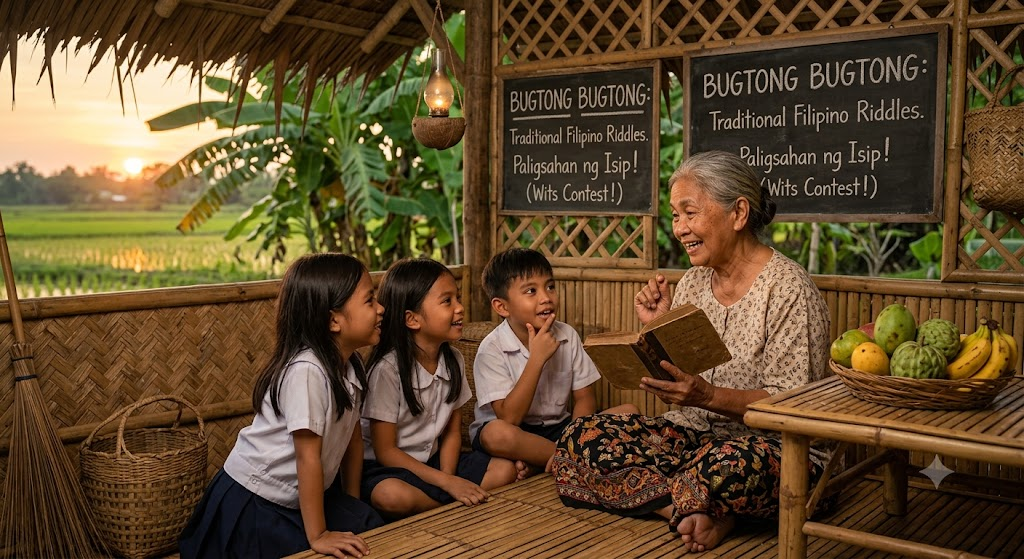
Have you ever tried to guess a puzzle where the answer is hidden in a short, poetic rhyme? In the Philippines, this classic tradition is known as Bugtong Bugtong. For generations, elders have used these clever brain teasers to entertain children while teaching them about everyday objects, nature, and cultural values. Far from being just a simple pastime, this traditional folk speech plays a huge role in Philippine oral tradition and local literature.
When you hear someone say “bugtong bugtong,” everyone around immediately stops to listen and guess. It turns into an instant game of wits! Let us dive into what makes these traditional riddles so special, how they connect families, and why they remain an important part of Philippine culture today.
What Exactly is a Bugtong?
A bugtong is a traditional Filipino riddle. It usually consists of one or two lines that rhyme, describing an object in a very confusing or metaphorical way. The goal of the listener is to guess the exact answer using clues hidden in the description. The phrase “bugtong bugtong” is simply the traditional call-and-response phrase used to start the game, similar to saying “riddle me, riddle me, ree.”
The Rich History of Philippine Riddles
Long before modern books and gadgets, communities in the Philippines gathered around the fire at night to share stories and riddles. Early Filipinos used the bugtong as a key part of their cultural heritage and oral tradition. It was a fun way to test a person’s intelligence and observation skills. Because they were passed down by word of mouth from parents to children, these riddles survived hundreds of years and are still celebrated today.
Why Elders Love Using Brain Teasers
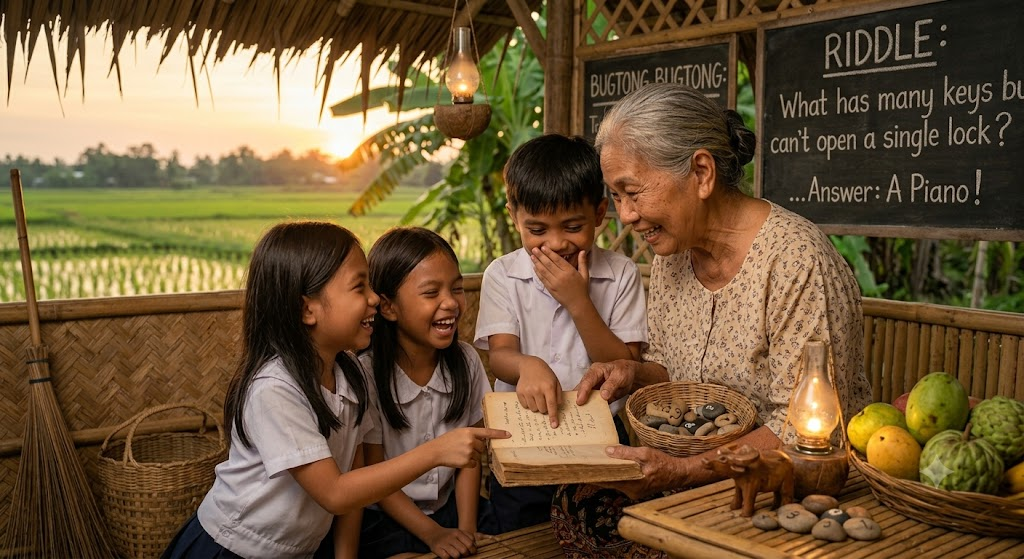
Filipino elders often share brain teasers to bridge the gap between generations. When grandparents share these local puzzles with their grandchildren, they pass down history in a fun way. It creates a warm, lively bonding moment. It also encourages children to respect their elders’ wisdom while learning how to think outside the box.
Building Sharp Thinking Skills for Kids
Solving a bugtong is like doing a mini-workout for your brain. It teaches children to look closely at ordinary things like fruits, kitchen tools, or animals. By listening to the clues, kids learn to make connections between completely different ideas. This sharpens their critical thinking, problem-solving abilities, and listening skills in a joyful, pressure-free way.
Exploring Philippine Culture and Folk Speech
As a beautiful piece of folk speech, the bugtong reflects the daily life and environment of the Philippines. Many riddles describe tropical fruits like mangoes or coconuts, traditional items like the banig (woven mat) or kandila (candle), and local animals. Learning these riddles is an easy and exciting way for anyone to appreciate traditional Filipino values and rural life.
A Fun Tool for Language Learning
Teachers and parents use bugtong bugtong to help kids learn the Tagalog language or local dialects. Because the riddles are short and use rhyme, they are very easy to remember. Children learn new vocabulary words, rhythm, and sentence structures without feeling like they are studying hard. It turns language learning into an exciting game.
Classic Examples of Bugtong Bugtong
To help you understand how these puzzles work, let us look at a few popular examples. See if you can guess the answers before reading the explanations!
Plaintext
Riddle 1: Isda ko sa mariveles, nasa loob ang kaliskis.
Translation: My fish in Mariveles, its scales are on the inside.
Answer: Sili (Chili pepper) – The spicy seeds are inside the green or red skin.
Riddle 2: Mataas kung nakaupo, mababa kung nakatayo.
Translation: It is tall when sitting, it is low when standing.
Answer: Aso (Dog) – A dog sits high on its haunches but stands on four low paws.
Riddle 3: Dumaan ang hari, naglaglag ang ginto.
Translation: The king passed by, gold fell down.
Answer: Araw (Sun) – The golden sunlight touches everything as the day passes.
These examples show how creative and poetic everyday observations can be.
Bringing Families Together Through Play
In today’s busy world, playing with riddles offers a wonderful way for families to unplug and connect. You do not need any special toys or boards to play. You only need your voice and a curious mind. Sharing these puzzles during road trips or before bedtime brings lots of laughter and creates beautiful family memories.
Keeping the Tradition Alive Online
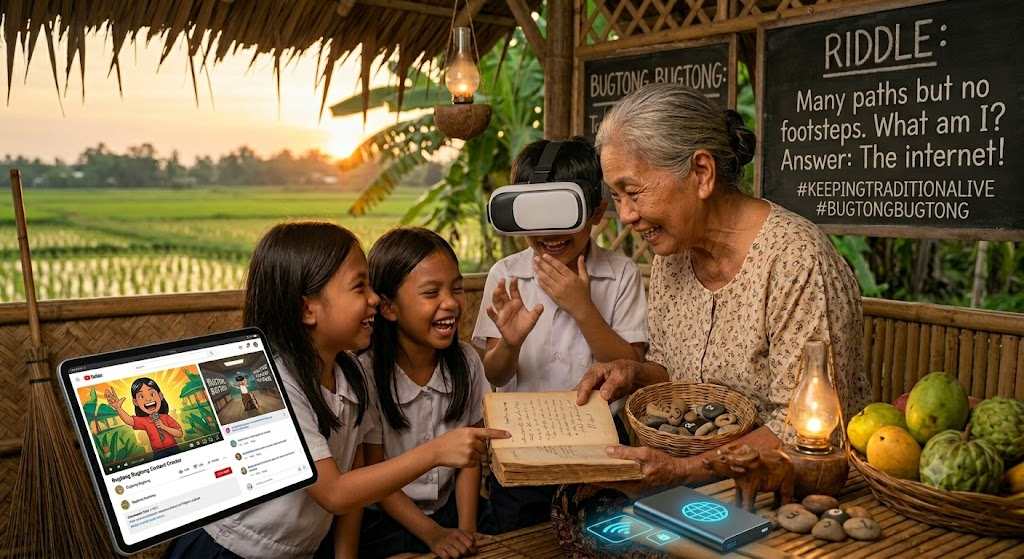
Today, the tradition of bugtong bugtong has found a new home on the internet. You can find these classic rhymes on social media, educational websites, and fun video channels. This digital shift helps young Filipinos living all over the world learn about their roots, ensuring this beautiful cultural treasure never fades away.
Complete Detailing Table
| Feature | Details |
| Main Topic | Bugtong Bugtong (Filipino Riddles) |
| Cultural Value | Oral tradition, folk speech, and folklore |
| Target Audience | Kids, parents, teachers, and culture lovers |
| Primary Goal | Brain stimulation, language learning, and family bonding |
| Common Themes | Nature, food, animals, and household objects |
| Key Characteristics | Short, poetic, rhyming, and metaphorical |
Frequently Asked Questions
What does bugtong bugtong mean in English?
It translates to “riddle, riddle” or “a puzzle to solve.” It is the traditional phrase used to invite someone to guess a riddle.
Are bugtong and proverbs the same thing?
No, they are different. A riddle asks you to guess a specific object or answer, while a proverb gives life advice or a moral lesson.
Why are riddles important in the Philippines?
They are an important part of Philippine literature and cultural heritage. They preserve history, sharpen young minds, and celebrate local language.
Can beginners learn Tagalog through riddles?
Yes! Because these puzzles are short, rhyming, and use simple words, they are fantastic tools for practicing and memorizing the Tagalog language.
Where can I find more Filipino riddles?
You can find them in cultural books, educational websites, or by asking older family members who grew up with these traditions.
How can I introduce riddles to my children?
Start by sharing simple and funny ones during mealtime or car rides. Turn it into a guessing game and offer gentle hints if they get stuck!
Conclusion
Bugtong bugtong is much more than a simple game. It is a joyful bridge to Philippine culture, a fun way to build sharp thinking skills, and a beautiful way to bring loved ones together. Why not try sharing a riddle with a friend or family member today? Keep the fun tradition alive, and let us know in the comments which riddle is your absolute favorite!