
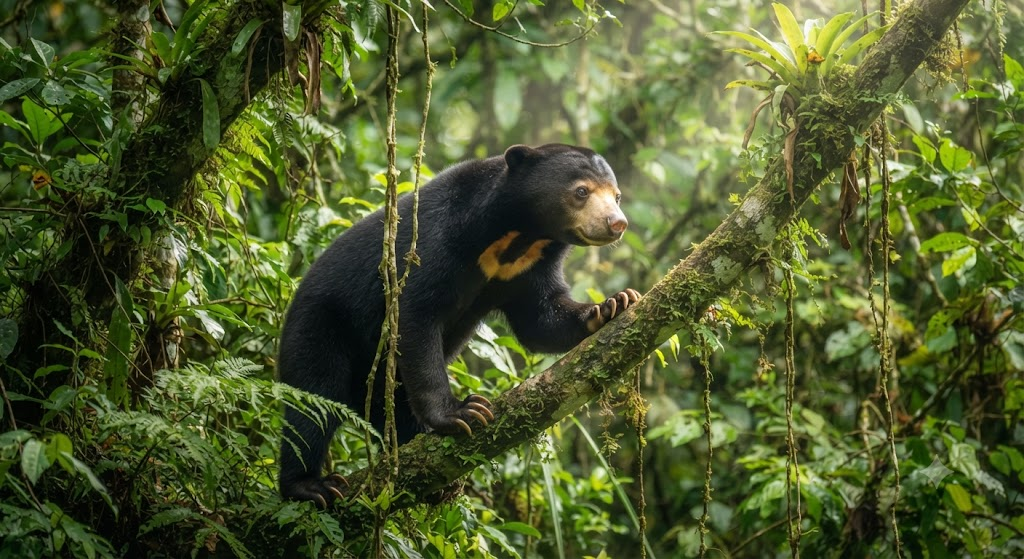
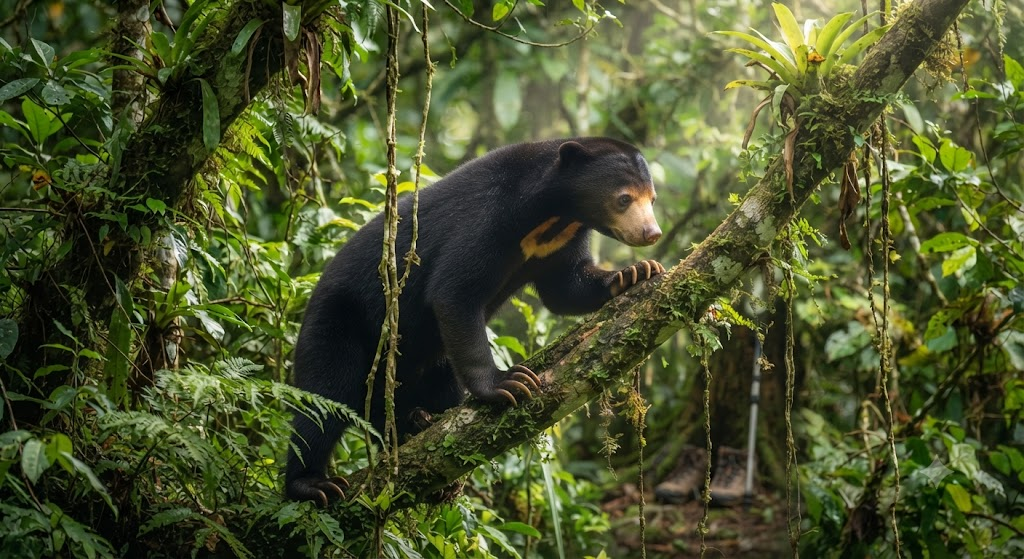
The Sun Bear is truly one of nature’s most fascinating creatures. Often called the “honey bear,” this animal holds the title of the world’s smallest bear species. They live deep in the tropical rainforests of Southeast Asia. You can easily spot a sun bear by the bright, golden patch on its chest. This mark is said to look like the rising sun, which is how they got their name! Even though they are small, they are very strong and clever. Watching them move through the trees is a special treat. They are built for climbing and spend a lot of time high up in the canopy. Let’s dive into what makes this little bear so incredible and why we must care about their future.
Where Do Sun Bears Live?
Sun bears live in the lush, thick jungles of Southeast Asia. You can find them in countries like Malaysia, Indonesia, and Thailand. They love the warm, humid climate of tropical evergreen forests. Because they are excellent climbers, they spend most of their lives in the trees. They need big, healthy forests to find food and shelter. Sadly, many of these forests are disappearing. This makes it harder for the sun bear to find a safe home. Protecting these wild jungles is the best way to make sure these bears stay healthy and happy in the wild for many more years to come.
Why Are They Called Honey Bears?
People often call them honey bears because they have a major sweet tooth! Their favorite snack in the forest is honey from beehives. They use their super long, sticky tongues to reach deep into tree holes to grab honey and bees. Their claws are very sharp and act like natural tools. These claws help them tear into rotting logs to find tasty insects like termites too. A sun bear is a great forager. They are always sniffing around for a quick meal. Because they eat fruit, nuts, and bugs, they play a big role in keeping the forest ecosystem growing and healthy.
The Special Patch on Their Chest
Every sun bear has a unique chest patch. No two bears have the same pattern! The color of this patch can range from orange to yellow or even a creamy white. Some people think these marks help the bears recognize each other in the dark forest. It is almost like a personal fingerprint. When a sun bear stands up to stretch or warn an intruder, they show off this bright chest patch clearly. Seeing one of these patches in the wild is rare and exciting. It adds a beautiful touch to their dark, sleek fur that keeps them cool in the hot weather.
Are Sun Bears Dangerous?
In the wild, most sun bears are shy and try to avoid people. They prefer to stay hidden high in the branches. However, like any wild animal, they will protect themselves if they feel scared or trapped. They are not aggressive hunters towards humans. Most problems happen when their habitat is destroyed, and they are forced into areas where people live. If you ever see a sun bear in the wild, the best thing to do is keep your distance. Let them be wild and free. Respecting their space keeps both the bears and the local people safe and happy.
What Do They Like to Eat?
A sun bear is what scientists call an omnivore. This means they eat a mix of plants and meat. Their diet changes depending on what is growing in the forest. During the fruit season, they love eating figs and other berries. When fruit is hard to find, they turn into expert bug hunters. They use their powerful noses to smell grubs under the bark of trees. Sometimes, they even snack on small lizards or birds if they are lucky. This varied diet helps them survive even when food is scarce. They are truly the clean-up crew of the rainforest.
Why Do They Have Such Long Tongues?
If you look closely, you will see that a sun bear has an amazingly long tongue. It can grow up to 10 inches long! This is very useful for their lifestyle. A long, skinny tongue is the perfect tool for reaching into deep crevices. They use it to slurp up honey or pull termites out of tight tunnels. It is amazing how evolution gave them the right gear for their favorite snacks. Without this special tongue, they would have a very hard time getting the energy they need to climb and play all day long. It is just one more cool thing about them.
Life as a Tree Climber
Sun bears are the best climbers in the bear family. They have long, curved claws that grip tree bark perfectly. Even the soles of their feet are bare, which helps them stay steady on slippery branches. They are not built for running fast on the ground, but they are masters of the high trees. They often build large, messy nests in the branches to nap in during the day. This keeps them away from predators on the ground. Being so high up gives them a great view of the forest and keeps them safe while they rest.
They Are Very Playful
Even when they are full-grown, sun bears love to play. You might see them wrestling with each other or batting at hanging leaves. Playing is a great way for them to practice their climbing skills and stay strong. Young cubs, especially, spend hours learning how to move through the branches. They are very smart and curious about everything around them. Observing them play shows us that they have big personalities. It is hard not to smile when you see a sun bear acting silly. Their playful nature reminds us that they are intelligent animals that deserve our kindness.
Threats to the Sun Bear
Sadly, the life of a sun bear is not always easy. Many are losing their homes because of logging and farming. People cut down the big trees they need for food and shelter. This is called habitat loss, and it is a major problem. Also, some sun bears are caught by hunters or kept as illegal pets. This is very sad because these bears need the wild to be truly happy. We can help by supporting groups that protect forests. Choosing products that are grown in a way that saves nature also makes a big difference for the survival of the species.
How We Can Help
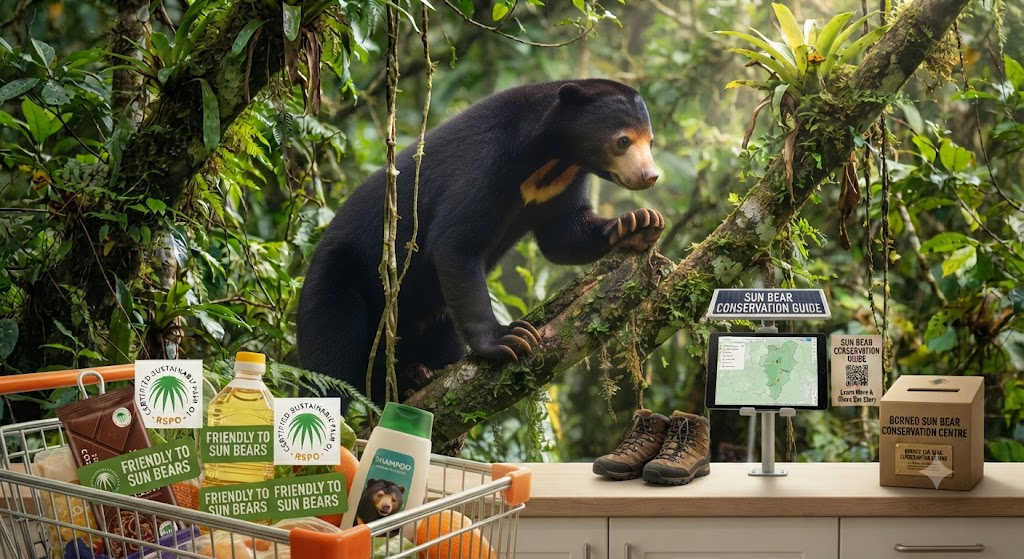
Helping the sun bear is something we can all do from home. First, we can learn more about them and share the story with friends. The more people know about the sun bear, the more they will want to protect them. You can also look for items made with sustainable palm oil. Palm oil farms often replace rainforests where sun bears live. By being smart shoppers, we can reduce the need to destroy their homes. Supporting zoos or charities that focus on saving Asian bears is another wonderful way to give back to these special animals.
Frequently Asked Questions
1. Are sun bears the smallest bears?
Yes! They are the smallest bear species in the world, often weighing less than 150 pounds.
2. Where do sun bears sleep?
They usually build comfortable nests high up in the branches of trees to sleep and rest safely.
3. Do sun bears hibernate?
No, they do not hibernate. Because they live in tropical areas, they have plenty of food all year round.
4. What is the chest patch for?
The golden patch on their chest is unique to each bear and helps them identify each other.
5. What do sun bears eat most often?
They love honey, but their diet is mostly fruit, insects, and small animals found in the forest.
6. How long is a sun bear’s tongue?
A sun bear has a very long, thin tongue that can grow up to 10 inches in length!
Conclusion
The sun bear is a small, charming, and vital part of our world’s rainforests. From their funny honey-eating habits to their expert tree-climbing skills, they truly are one of a kind. By learning about the sun bear, we take the first step toward keeping them safe. Let’s work together to protect their forest homes so these amazing animals can thrive for generations. Do you want to do more? Consider donating to a wildlife charity or spreading the word about protecting Asian jungles today. Every small action helps save the sun bear!