
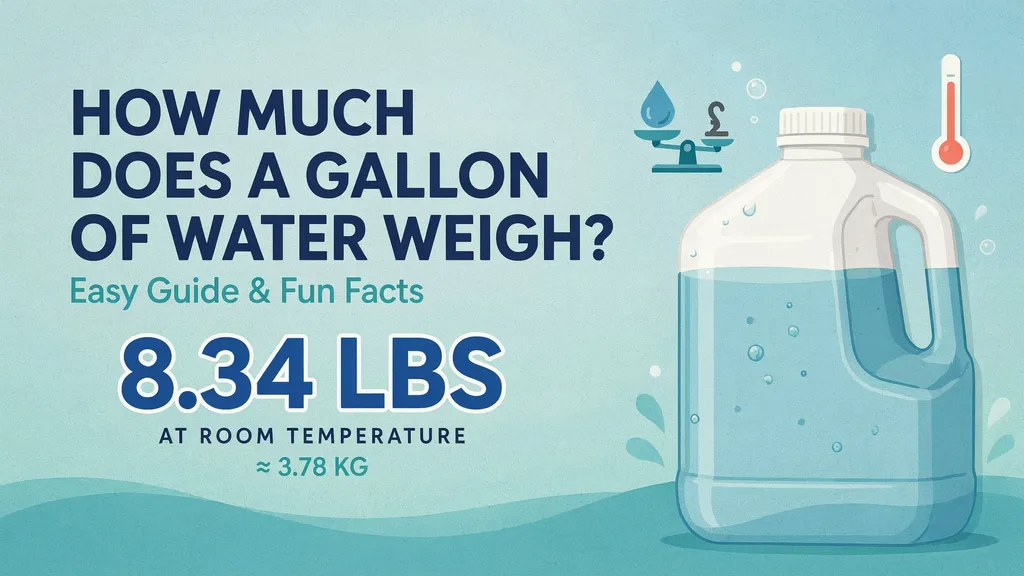
Have you ever picked up a big jug of water and thought, “Wow, this is pretty heavy”? How Much Does a Gallon of Water Weigh is something we use every single day to drink, cook, and clean. But most of us never stop to think about how much it actually weighs. If you are mixing up a big batch of juice, filling a backyard pool, or just curious about science, knowing the weight of water is super helpful.
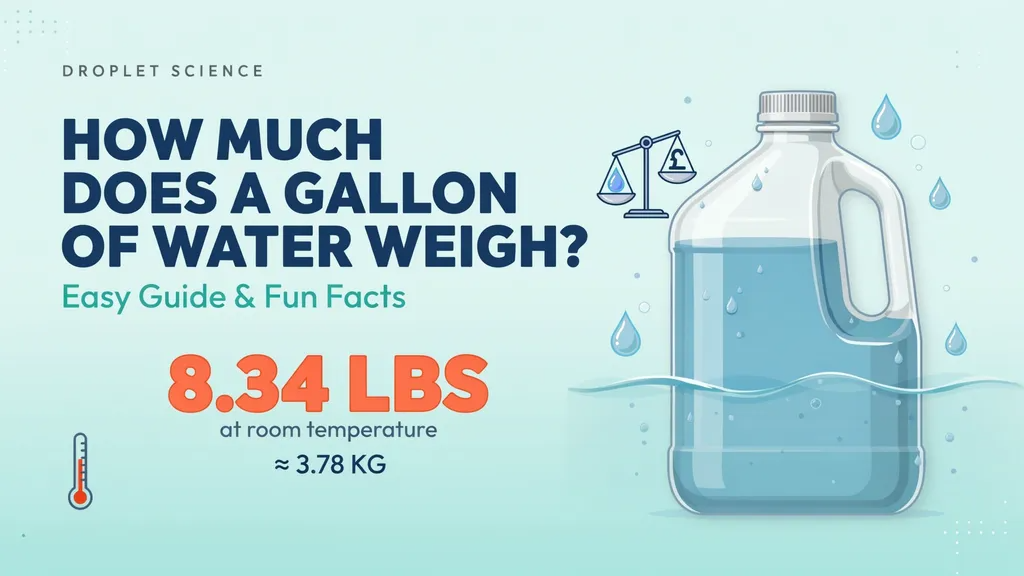
So, what is the short answer? A standard US gallon of water weighs about 8.34 pounds at room temperature. That is roughly the same as a very large bag of sugar or a small pet! But did you know that water is pretty tricky? Its weight actually changes depending on how hot or cold it is. When water gets freezing cold or super hot, it likes to spread out or shrink. This changes its density, which means the weight shifts just a tiny bit. Do not worry, we will break down all these cool science facts so they are super easy to understand. Let us dive right in and explore the amazing world of water weight!
Why Water Weight Matters in Daily Life
Think about all the times you deal with water without even realizing it. When you fill up a bathtub, you are pouring hundreds of pounds of water into your house. If you are baking a delicious cake, the recipe might ask for cups of water or milk, and you need to know how heavy those liquids are. Understanding how much does a gallon of water weigh helps us solve everyday puzzles.
Carrying heavy things safely is a big deal. If you try to lift a huge five-gallon jug of water for a cooler, you are lifting over 40 pounds! Knowing this helps you protect your back and ask for help when you need it. Plus, cooks and bakers use this math all the time. In the kitchen, a pint’s a pound the world around, which is a fun little rhyme that connects liquid volume to actual weight. By learning these simple tricks, you can feel like a kitchen wizard and a science expert all at once.
The Exact Science Behind Water Density
Science can sometimes sound super complicated, but it is really just a way to explain how the world works. When we talk about how much does a gallon of water weigh, we have to talk about something called density. Density is just a measure of how packed together tiny water particles are. Imagine a crowded school bus versus a bus with only three kids on it. The crowded bus is much heavier because everything is packed in tightly.
Water particles love to cuddle up close together when they get cold. When water is super chilly, just above freezing, it gets as dense and heavy as it can possibly get. But when you heat that water up to a boiling hot tea temperature, the little particles get excited and bounce around. They spread out, which makes the water take up a little more space and weigh slightly less per gallon. Isn’t it wild to think that temperature changes the weight of your drinking water?
US Liquid Gallon vs. Imperial Gallon
Did you know that not all gallons are created equal? If you live in the United States, your gallon is a bit different from a gallon in the United Kingdom or Canada. This is one of those fun geography facts that trips a lot of people up. The US standard liquid gallon is smaller than the Imperial gallon used across the pond.
Because the containers are different sizes, the answer to how much does a gallon of water weigh changes depending on where you are shopping or reading a recipe. A US liquid gallon holds 128 fluid ounces and weighs about 8.34 pounds. On the other hand, an Imperial gallon holds about 160 fluid ounces and weighs roughly 10.02 pounds! That is a pretty big difference. If you are following an old cookbook from another country, keeping this little weight secret in mind will save your dinner from turning into a kitchen disaster.
How Temperature Changes Water Weight
Let us take a closer look at how hot and cold temperatures play tricks on water. When you put a bottle of water in the freezer, have you ever noticed how the ice pops out of the top? That happens because water actually expands when it freezes. Most liquids shrink when they get cold, but water is a total rebel.
When water turns into solid ice, its particles form a rigid crystal structure that takes up more room. This means ice is actually lighter than liquid water, which is why ice cubes float in your soda cup. So, while a gallon of room temperature water weighs 8.34 pounds, boiling hot water weighs a tiny fraction less because the heat makes it expand just a little bit. Science is full of these fun little surprises that make our everyday world so cool to explore and learn about.
Measuring Water in Pounds and Kilograms
People all over the world measure things in different ways. In the US, we love using pounds and ounces. But in many other countries, people use the metric system, which means they talk about grams and kilograms. It is super handy to know how to switch back and forth between these two measurement styles.
If you are ever wondering how much does a gallon of water weigh in metric terms, the math is pretty neat. One US gallon of water is equal to about 3.78 liters. Since one liter of pure water weighs almost exactly one kilogram, a full US gallon of water weighs about 3.78 kilograms. That is roughly 8.34 pounds translated into the metric language. Knowing both systems makes you ready to travel anywhere in the world and talk to anyone about science!
Comparing Water to Other Common Liquids
Water is pretty unique, but how does it stack up against other liquids in your pantry? If you fill up a gallon jug with different household liquids, you will get very different weights on the scale. Every liquid has its own special density based on what tiny ingredients are floating around inside it.
For example, a gallon of cooking oil is usually lighter than water. Oil floats on water because its density is lower, which is why Italian salad dressing separates into layers. On the flip side, a gallon of thick honey or sweet maple syrup is way heavier than water because it is packed with heavy sugars. Milk is very close to water since milk is mostly made of water, but it has extra fats and proteins that make it a tiny bit heavier. Comparing these weights is a fun kitchen experiment you can try at home!
Practical Uses for Knowing Water Weight
Why should you care about how much does a gallon of water weigh? Knowing this fact is actually super useful for outdoor projects and home improvement. Imagine you are buying a brand-new plastic swimming pool for your backyard. Before you fill it up with the garden hose, you need to know if your lawn can hold all that heavy water without turning into a giant muddy swamp.
If your pool holds 100 gallons of water, you are adding over 830 pounds of weight to your yard! That is like parking a heavy motorcycle right on your grass. Gardeners also need to know this when mixing plant fertilizers or setting up rain barrels to water their vegetables. A full rain barrel can get surprisingly heavy, so building a strong, sturdy stand is super important to keep everything safe and secure.
Fun Facts About Water and Weight
Water is truly amazing, and it has some wild superpowers when it comes to weight and nature. Did you know that huge clouds floating lazily across the sky are actually packed with millions of pounds of water droplets? Even though a cloud looks light and fluffy like cotton candy, it weighs as much as a giant jumbo jet! It stays up in the air because the water is spread out into tiny little drops.
Another fun fact involves the oceans that cover most of our planet. Seawater contains lots of dissolved salt and minerals. Because salt adds extra stuff into the liquid, a gallon of ocean water actually weighs a bit more than a gallon of pure tap water. It weighs closer to 8.55 pounds! This extra weight is also why it is much easier for your body to float in the ocean than in a fresh swimming pool.
Conclusion
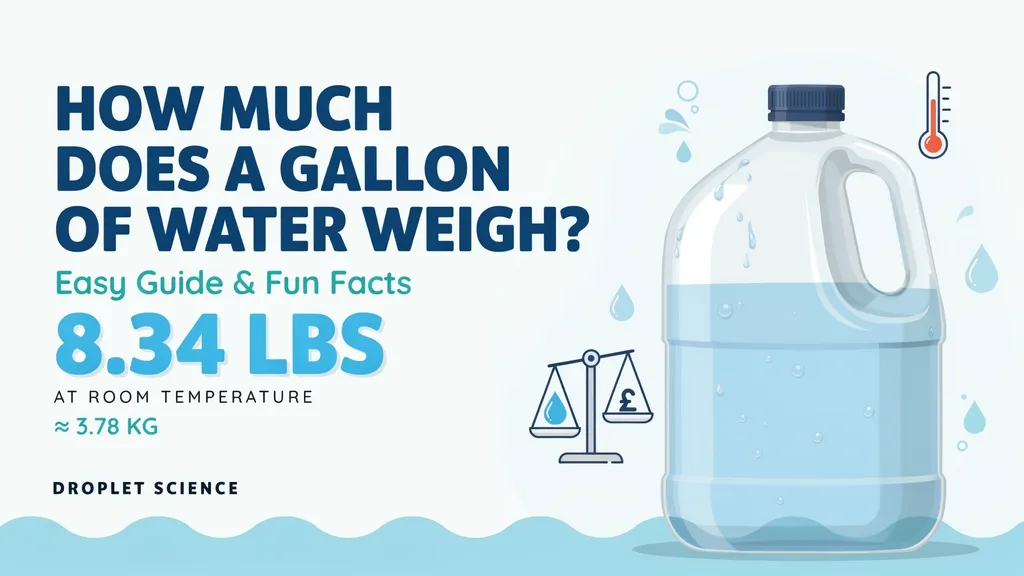
We have taken a fun journey exploring everything there is to know about water weight. From checking out the standard measurement of 8.34 pounds to learning how temperature and geography change the numbers, you are now a total pro. Next time you pick up a big jug, you will know exactly what is happening inside that plastic container.
Understanding these simple science facts makes our daily routines a little more interesting. Whether you are baking, gardening, or just pouring a refreshing glass of ice water, you have got the knowledge to back it up. What is your favorite way to enjoy a cool glass of water on a warm day? Drop a comment below and share your thoughts with us!
Frequently Asked Questions
How much does a gallon of water weigh in pounds?
A standard US liquid gallon of pure water weighs about 8.34 pounds at room temperature. This weight can shift slightly depending on whether the water is freezing cold or boiling hot.
Does hot water weigh the same as cold water?
No, hot water weighs a tiny bit less than cold water. Heat makes water particles spread out, which lowers its density and makes it take up slightly more space for the exact same amount of liquid.
How much does a gallon of water weigh in kilograms?
In the metric system, one US gallon of water weighs approximately 3.78 kilograms. This is because a gallon equals about 3.78 liters, and one liter of pure water weighs one kilogram.
Why does ice float if it is made of water?
Ice floats because water expands when it freezes into a solid. This expansion makes ice less dense than liquid water, allowing chunks of ice to float right on top of your drink.
Does ocean water weigh more than tap water?
Yes, ocean water weighs more than regular tap water because it contains dissolved salt and minerals. A gallon of ocean water weighs about 8.55 pounds compared to 8.34 pounds for fresh water.
How much does a gallon of milk weigh compared to water?
A gallon of milk weighs a little bit more than a gallon of water, usually around 8.6 pounds. This is because milk contains extra fats, sugars, and proteins that make it slightly denser.